The five main factors that determine app development pricing: app type, feature complexity, design, backend, and integrations.
"How much does it cost to build a mobile app?" It's the very first question almost every business owner asks before starting an app project, and let's be honest: there's no fixed number that applies to every project. In this article, we clearly break down the factors that genuinely affect the price of building an app, so you can walk into negotiations with any development team with a much clearer picture.
The cost of building a mobile app varies just as much as the cost of "building a building" — a small apartment and a commercial tower don't cost the same, even though both are technically "buildings." Apps work exactly the same way; complexity, the number of features, and the level of customization create price differences of several multiples.
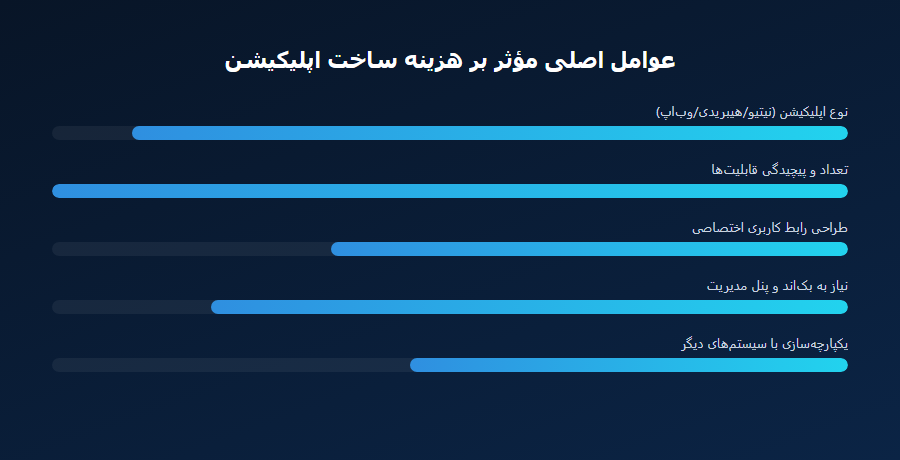
A native app (built separately and specifically for iOS and Android) usually delivers the highest quality and fastest performance, but it also costs more, since it's essentially two separate projects. A hybrid app runs on a single shared codebase across both platforms and reduces cost significantly. A web app (PWA) is the cheapest option, but it comes with limited access to the phone's hardware features.
A simple informational app (with no user accounts or payments) is far cheaper than one with a membership system, online payments, push notifications, maps and location tracking, or live chat. Every additional feature demands more development and testing time.
Using a ready-made interface template is cheaper, but custom design tailored to your brand identity — which also delivers a better user experience and higher retention — takes more design time.
If your app needs a server, a database, and an admin panel for you to manage it (which is true of most commercial apps), this part can take as much time and cost as the mobile app itself.
Connecting to a payment gateway, an SMS system, or your existing accounting or inventory software adds extra cost that needs to be factored into the estimate from the very start.
The best strategy is to start with an initial version (an MVP) that includes only the most essential features, launch it, gather feedback from real users, and then gradually expand its features based on real data — not guesswork. This approach both reduces financial risk and increases the app's overall chances of success.
If you have an app idea and want to know exactly how much time and money it will take, our team can offer a clear, no-obligation estimate in a free consultation, based on your exact requirements.
 Hamed Rezaie