 Hamed Rezaie
Multilingual Website SEO: URLs, hreflang and Localization
Multilingual website SEO done right: URL structure, hreflang tags, real localization instead of translation, right-to-left layouts and common mistakes.
Adding a second language doubles your potential audience, but only if search engines understand which version is for whom. Multilingual website SEO is mostly about structure: clear URLs, correct hreflang tags and content written for each market rather than translated word for word.
Choose a URL structure
Each language needs its own crawlable address.
| Structure | Example | Notes |
|---|---|---|
| Subdirectory | example.com/ar/ | Easiest to manage; all languages share the domain's authority |
| Subdomain | ar.example.com | Clear separation; treated more independently |
| Country domain | example.iq | Strongest local signal; most expensive to maintain |
For most businesses, subdirectories are the practical choice. Avoid changing language with cookies or URL parameters alone, because search engines may never see the other versions.
hreflang: tell Google which page is for whom
hreflang annotations connect the equivalent pages of each language so Google can show the right one.
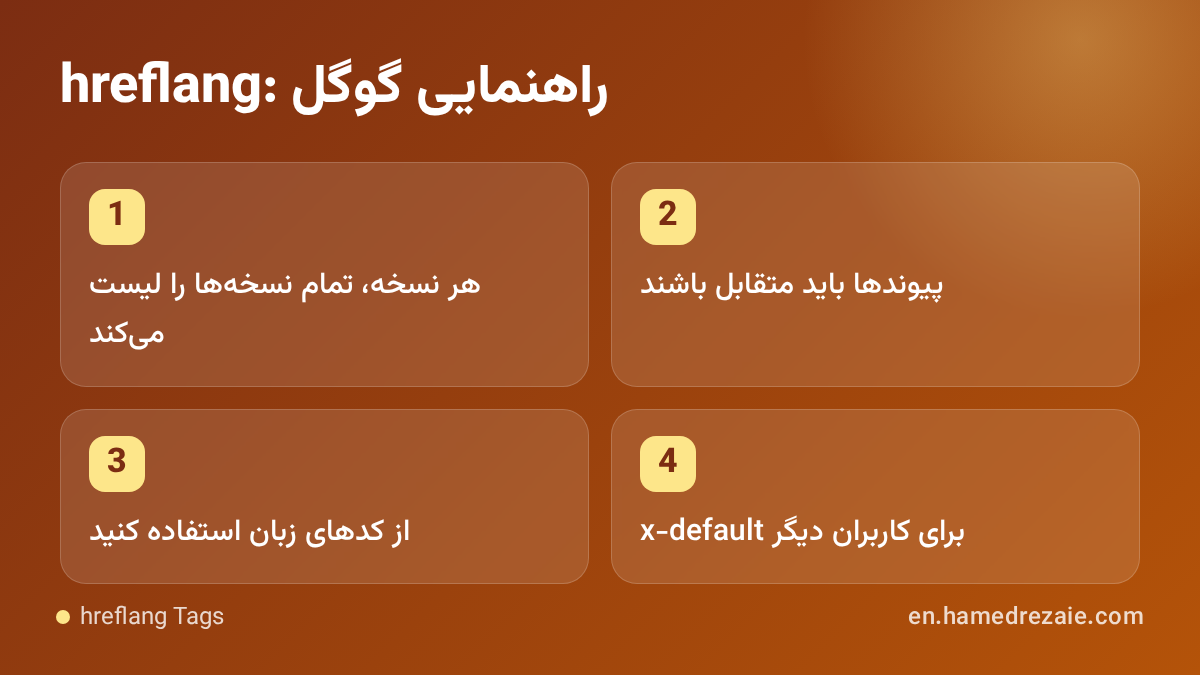
- Every version lists all versions, including itself.
- Links must be reciprocal: if the English page points to the Arabic page, the Arabic page must point back.
- Use language codes (
en,ar,fa) and add a region only when the content really differs by country. - Add
x-defaultfor the page shown to everyone else. - Only link pages that are true equivalents.
Errors here are the most common problem in multilingual website SEO and they fail silently: nothing breaks, the wrong version simply ranks.
Translate or localize?
Translation changes the words. Localization changes what matters to the reader:
- Keywords: people in different markets search differently. Research keywords in each language instead of translating your list.
- Examples and proof: local clients, local currency, local payment and delivery options.
- Contact details: a phone number with a country code, working hours with a time zone.
- Tone: formal in one market, direct in another.
Machine translation is a starting point at best. Text that reads as translated loses trust quickly.
Right-to-left languages
Arabic, Persian and Hebrew need more than aligned text. The whole layout mirrors: navigation, icons with direction, progress steps, form fields. Use logical CSS properties (start and end instead of left and right) so one stylesheet serves both directions, and choose fonts designed for the script.
One language per page
Do not mix two languages in the main content of a single page. Set the lang attribute correctly, translate titles, descriptions, alt text and URLs where practical, and keep navigation in the page's language.
Do not redirect by IP
Automatic redirects based on location send search engine crawlers, which mostly crawl from one country, to a single version. They also frustrate travellers and people who prefer another language. Show a visible language switcher and, if you wish, a dismissible suggestion.
Rolling out a new language
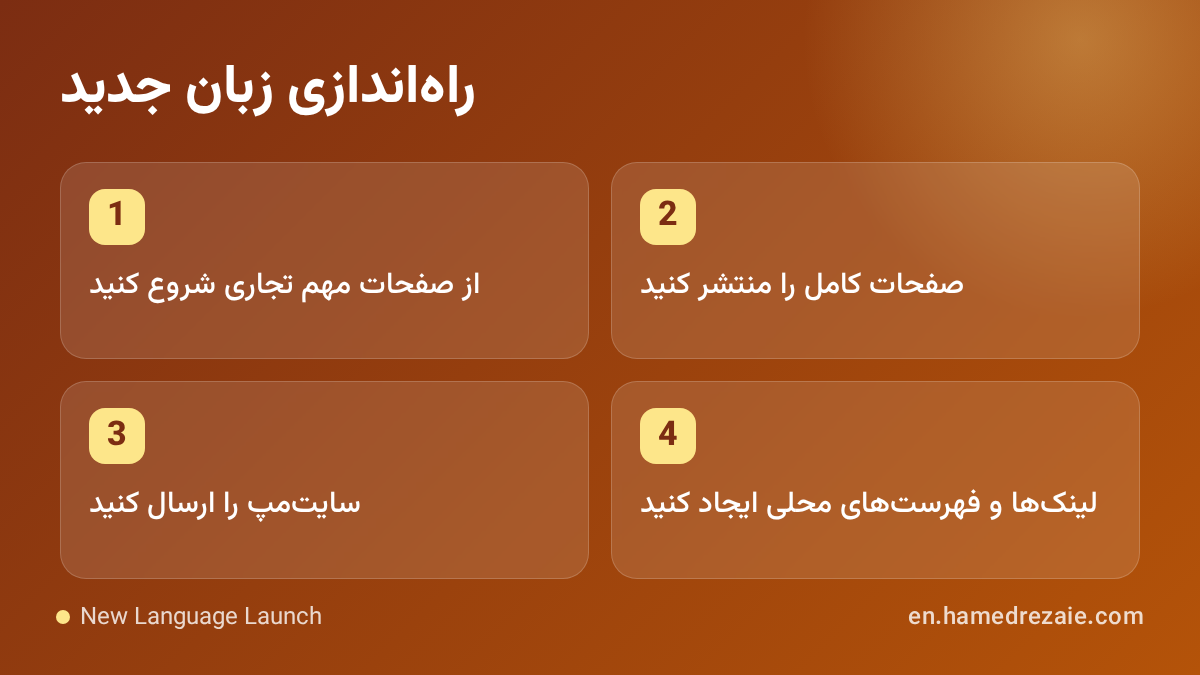
- Start with the pages that matter commercially, not the whole site.
- Launch only complete pages. Half-translated pages harm trust.
- Submit a sitemap for the new language.
- Build a few local links and listings; authority is partly per market.
- Measure each language separately in Search Console and analytics.
Before launch, run the technical SEO checklist. If you need a site built for several languages from the start, see our website design service.
Summary
Multilingual website SEO rests on three things: a separate URL for each language, reciprocal hreflang tags between true equivalents, and content localized for each market. Add mirrored layouts for right-to-left scripts and never force a language by IP.
FAQ
Does translated content count as duplicate content? No. The same content in different languages is not duplicate, provided each version is on its own URL.
Do I need hreflang with only two languages? Yes. It prevents the wrong language from appearing in search results.
Should I translate every page? No. Translate the pages that serve that market and leave the rest out of the hreflang set.