How we built a custom SEO platform to manage technical audits, AI content, automated fixes and growth across three multilingual sites at once.
Running SEO for one site is manageable with spreadsheets and a few browser tabs. Running it for three sites at once, in three different languages, each with its own audience and content strategy, is not. Off-the-shelf SEO tools either couldn't be customized to this depth, or had no way to actually reach into the server and fix what they found. So instead of buying another dashboard, we built our own platform: a single command center for technical audits, content generation, automated fixes, and organic growth across all three sites.
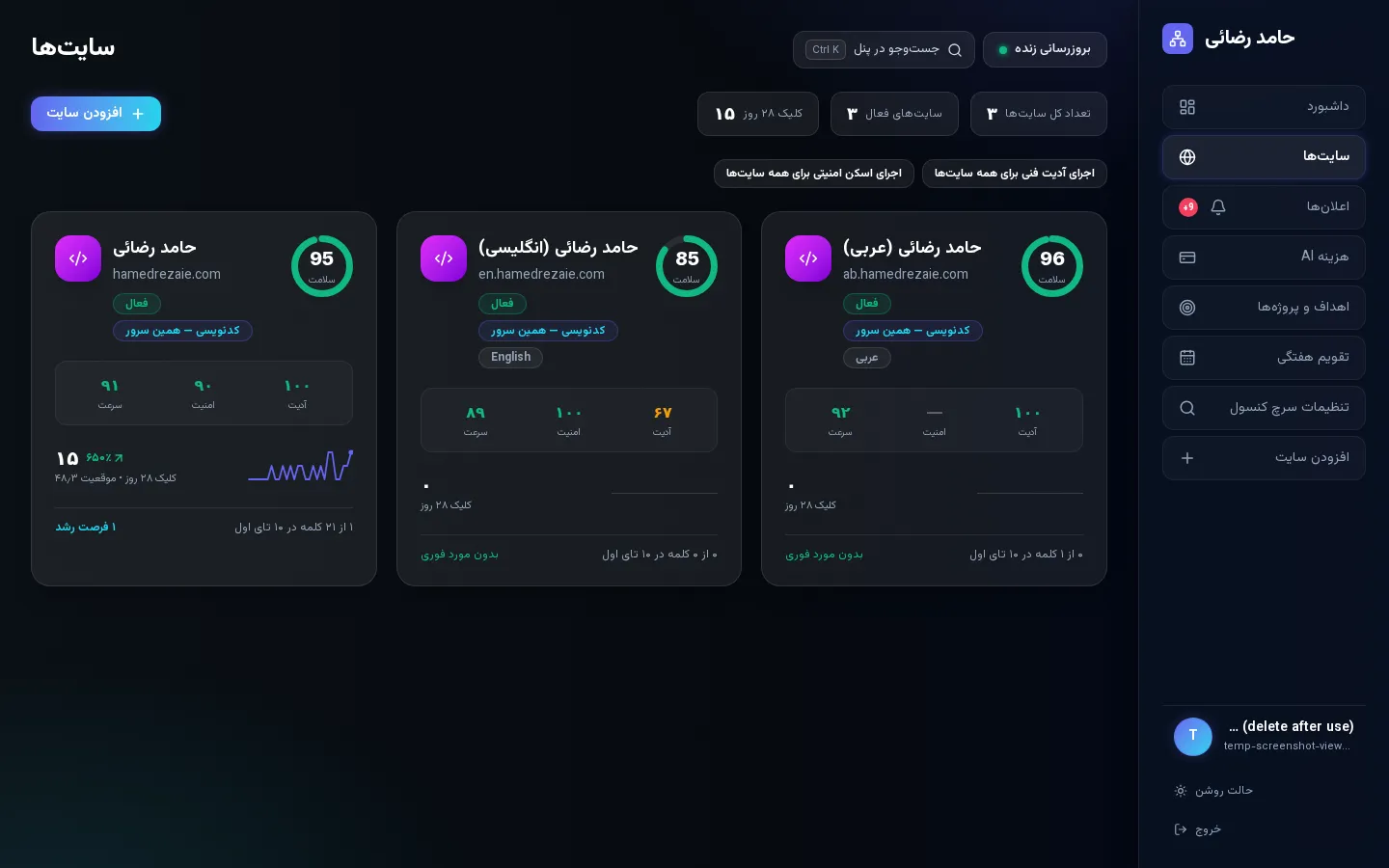
Auditing one site isn't hard. Auditing three sites in three languages — each needing regular crawls, Core Web Vitals checks, keyword rank tracking, localized content, and technical fixes — quickly outgrows what a person can track by hand. Generic SEO tools were either priced for a scale we didn't need, or simply had no path from "here's what's wrong" to "here's what we fixed."
The platform runs on Next.js and PostgreSQL, deployed directly on our production server. What sets it apart from most SEO tools is that it isn't only a reporting dashboard — it closes the loop from "problem detected" to "problem fixed," safely and automatically.
Every site is crawled on a schedule by a purpose-built analyzer that checks DNS, SSL certificate health, robots.txt and sitemap correctness, title and meta description structure, broken internal links, duplicate content, and structured data (Schema.org). Alongside that, a real headless Chromium browser (via Playwright) opens each page, runs Lighthouse for performance, accessibility and best-practice scoring, and runs axe-core for accessibility violations. The result is an accurate overall score backed by real findings, not generic guesswork.
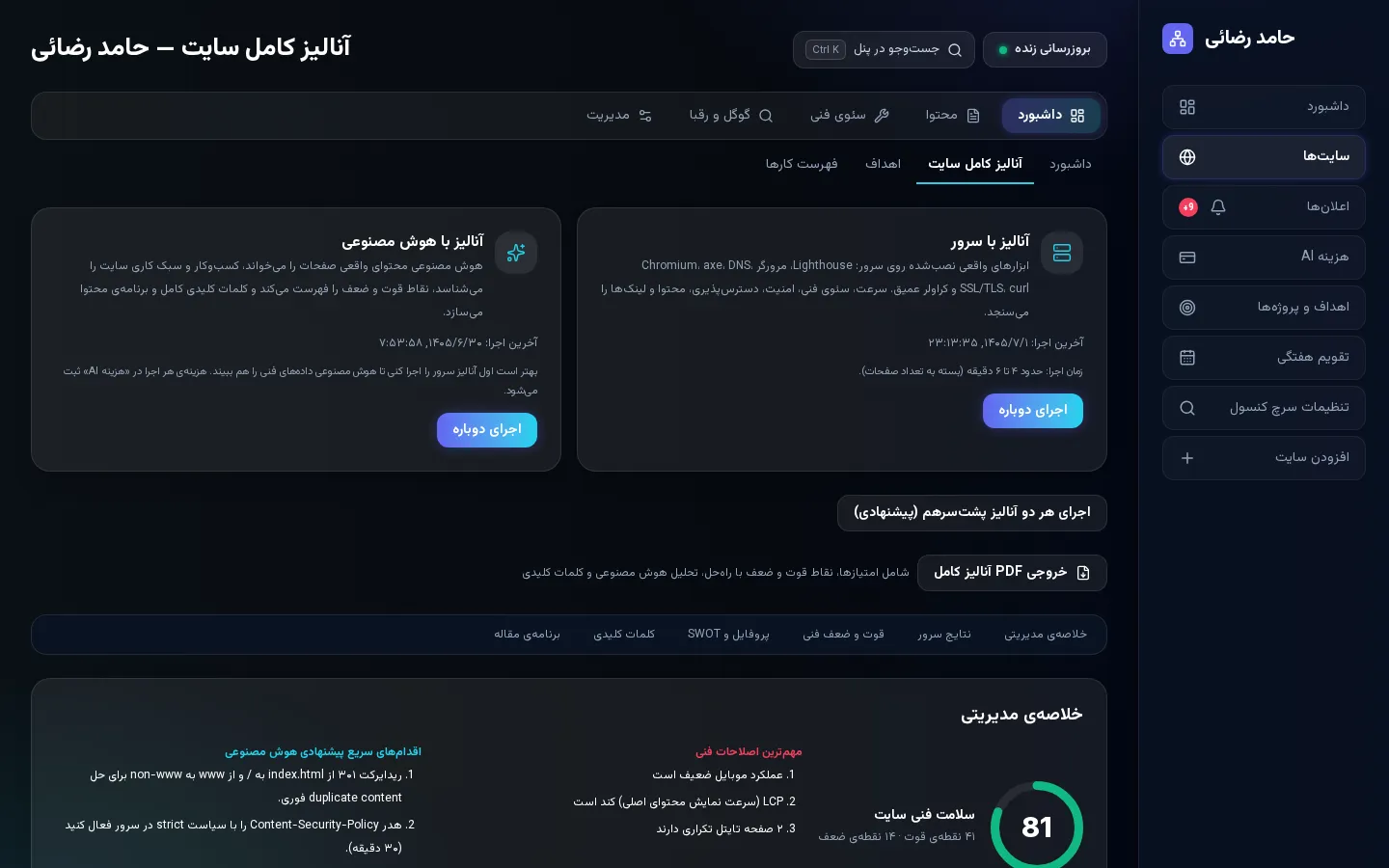
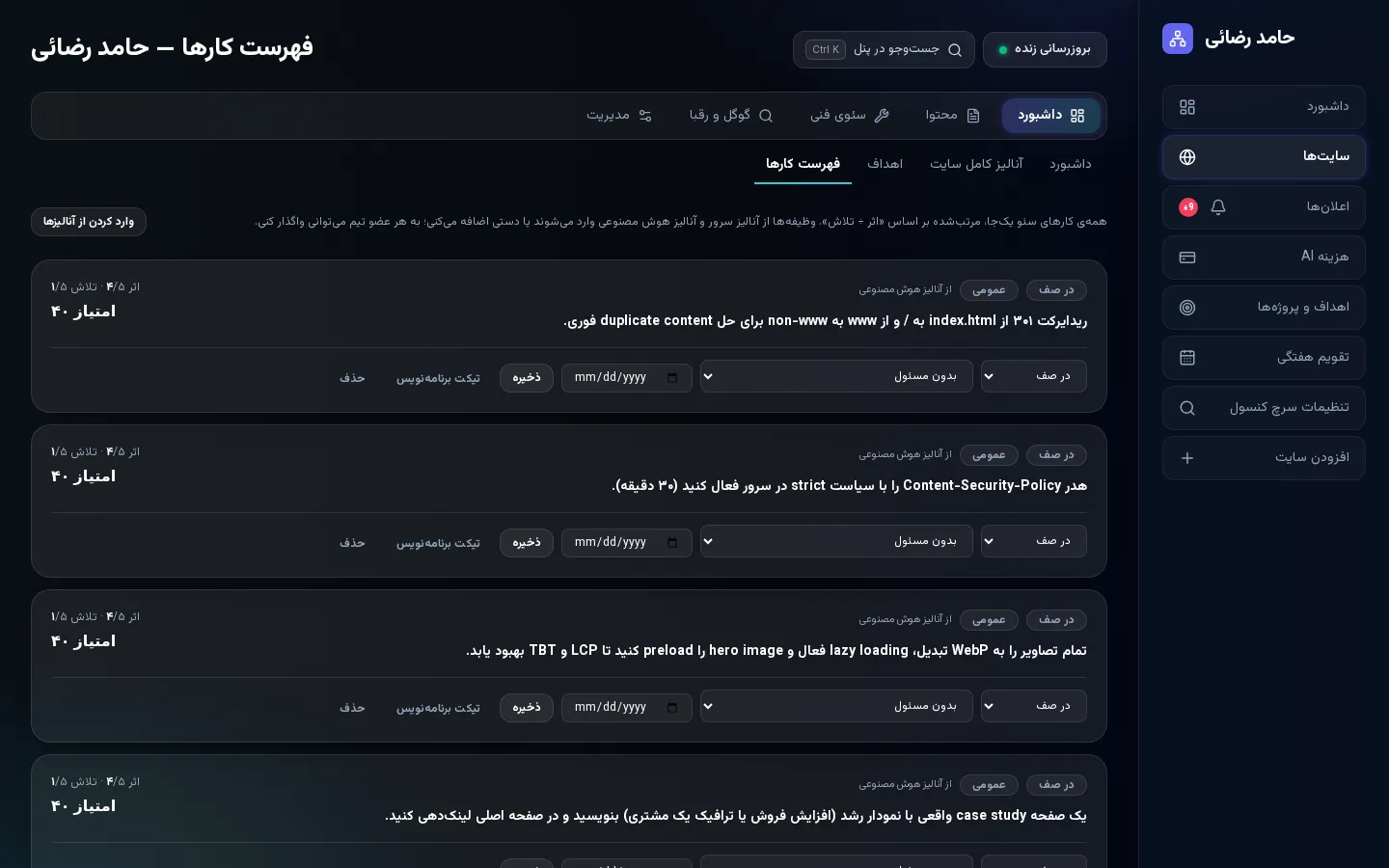
When an issue can be fixed automatically — missing security headers, an incomplete robots.txt or sitemap.xml, missing redirects, a missing viewport tag or meta description, missing Organization schema — the platform queues a fix request. That request is picked up by a separate root-privileged service that applies the change through a set of locked-down helper scripts, never with open direct access, and always after backing up the original file so any change can be rolled back.
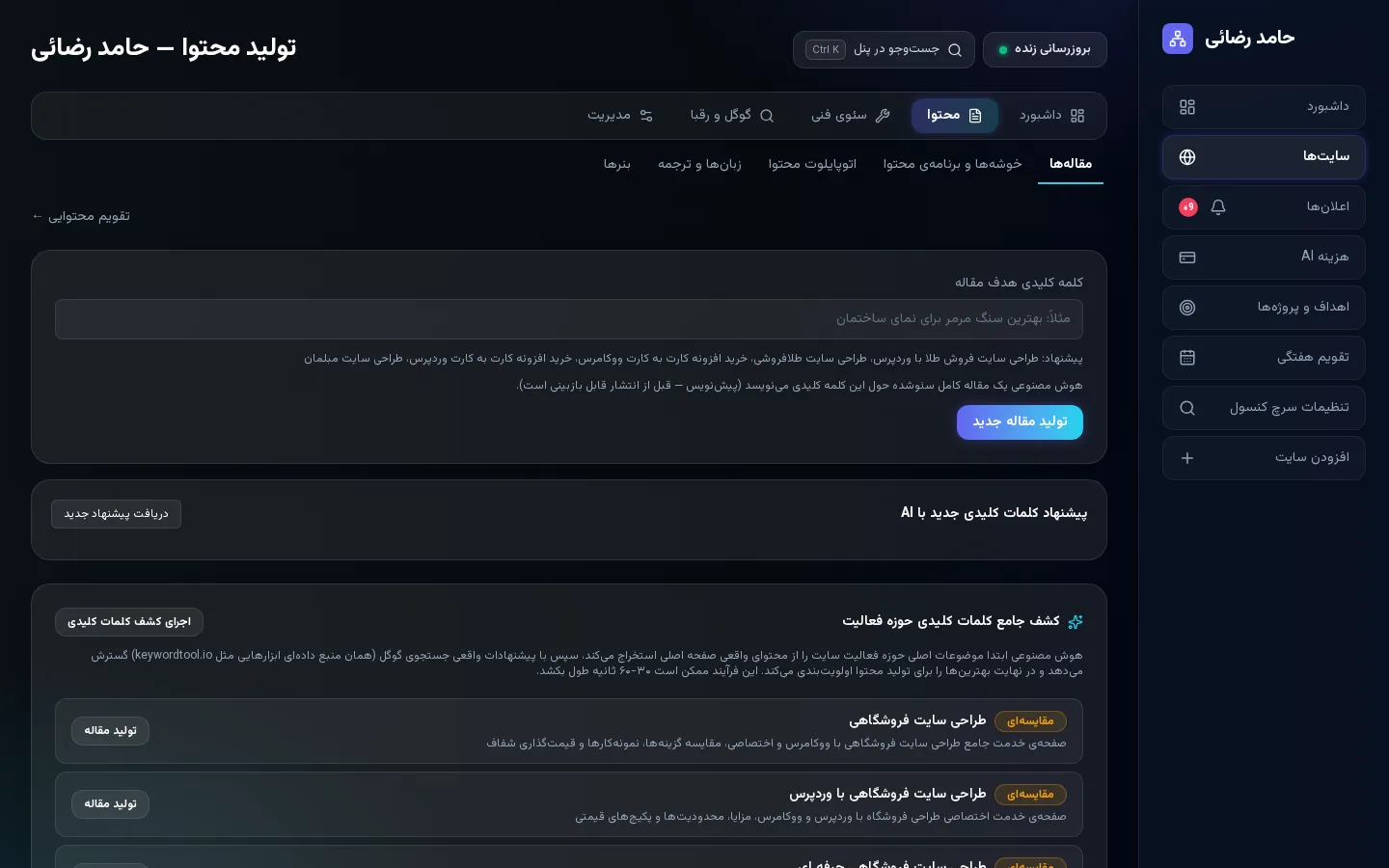
The content engine first builds a business and voice profile from the site's real pages, then researches and prioritizes keywords through competitor analysis and Google Autocomplete expansion, then drafts each article with full on-page SEO structure — proper H1/H2/H3 hierarchy, meta description, relevant imagery. An editorial workflow (draft → review → approve → publish) keeps quality control in place before anything goes live.
Because weak security directly undermines trust and rankings, the platform also runs periodic malware scans, checks security headers, and monitors SSL health. That same infrastructure proved itself in a real incident, helping detect and fully clean a malware infection on one of the server's hosted accounts without any impact on the other sites.
This project proves the same thing we tell every client: the best SEO tooling is the tooling built around your actual infrastructure, not a generic solution trying to fit everyone. If you're looking for a custom system to manage, audit and grow your own site or sites, we'd be glad to talk about your project.
 Hamed Rezaie